The Ultimate Guide to Christmas Tree Safety for Cats and Holiday Hazards for Pets
The holiday season brings joy, warmth, and plenty of festive decorations into our homes. But beyond general winter safety for your pet, what’s indoors is just as important to understand when it comes to keeping your feline friend safe this holiday season.
Understanding Christmas tree safety for cats and other holiday hazards for pets ensures your celebrations remain merry while keeping your loyal companions safe and healthy. Whether you’re a first-time cat owner or a seasoned pet parent, this guide will help you create a safe, festive environment that both you and your cat can enjoy.
Why Christmas Trees Are Irresistible to Cats
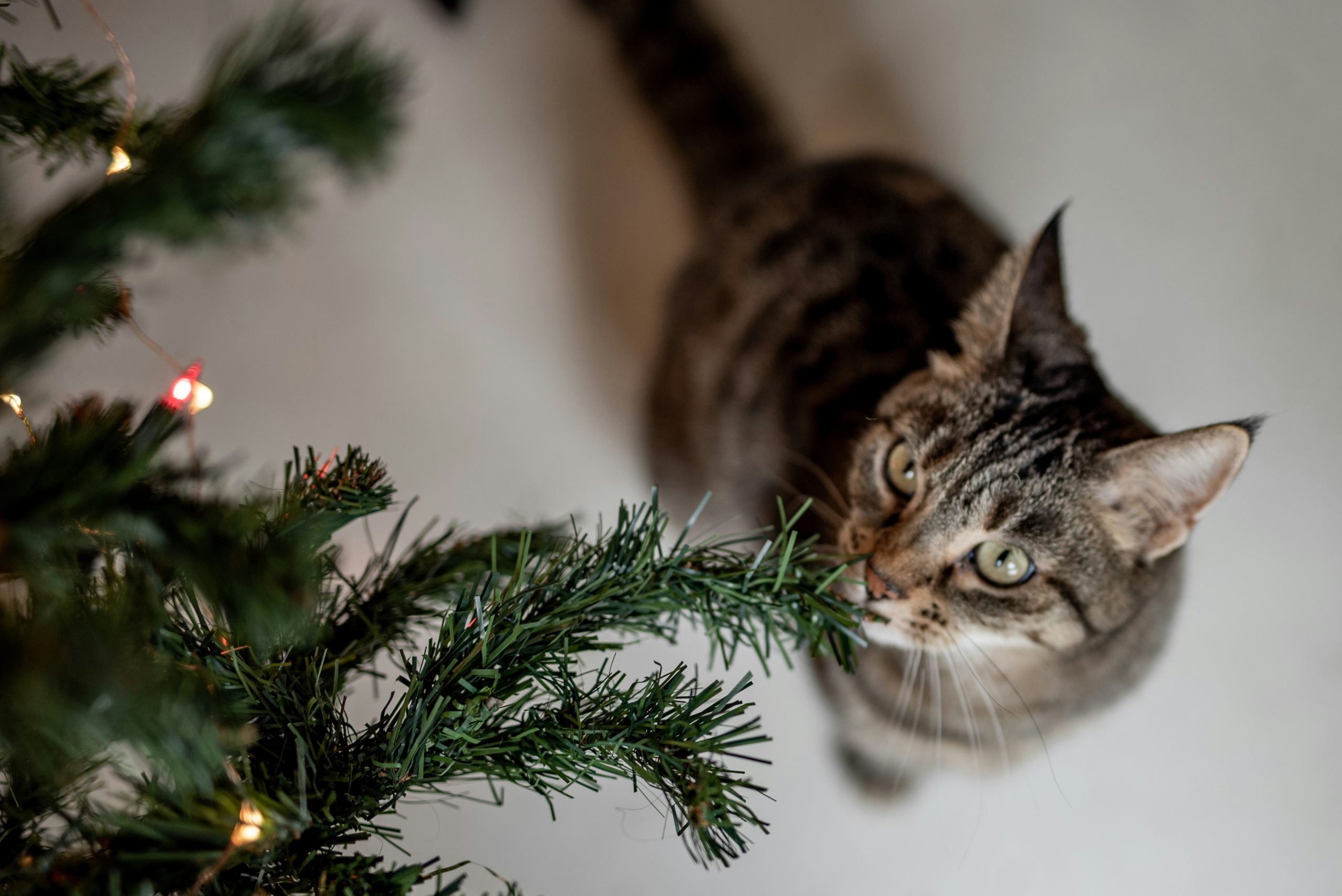
Cats are naturally curious creatures with strong hunting instincts. A Christmas tree, with its dangling ornaments, rustling branches, and interesting scents, resembles the ultimate indoor jungle gym. Your cat sees movement, texture, and opportunity for play—not potential danger.
This instinctive behaviour means that simply hoping your cat will ignore the tree isn’t a realistic strategy. Instead, you need to cat-proof your holiday decorations from the ground up. The good news is that with thoughtful preparation, you can protect both your tree and your cat throughout the season.
Choosing a Cat-Safe Christmas Tree
Your first decision—real or artificial—matters more than you might think when it comes to Christmas tree safety for cats.
- Real Trees: While beautiful and fragrant, real trees present several risks. Pine needles can puncture your cat’s digestive tract if ingested, and the sap can cause stomach upset. The water in your tree stand often contains bacteria, preservatives, or fertilizers that are toxic to cats. If you choose a real tree, cover the water reservoir completely so your cat cannot access it.
- Artificial Trees: These eliminate some risks but introduce others. Older artificial trees may contain lead or other harmful materials. Cats who chew on plastic branches can suffer intestinal blockages. Choose a high-quality artificial tree and monitor your cat’s interaction with it carefully.
Regardless of which type you choose, secure your tree properly. Use a sturdy, weighted base, and consider anchoring the tree to the wall or ceiling with fishing line. A toppled tree can injure your cat and create a dangerous mess of broken ornaments and exposed electrical cords.
Ornament and Decoration Safety
Not all decorations are created equal when you have a curious cat at home. Some pose immediate dangers, while others present risks if ingested or broken.
- Tinsel and Garland: These shimmering decorations top the list of holiday hazards for pets. Cats are attracted to tinsel’s movement and texture, but if swallowed, it can cause a life-threatening condition called linear foreign body obstruction. The stringy material can bunch up in the intestines, cutting off blood supply and requiring emergency surgery. Skip tinsel entirely if you have cats, or use it only in areas your cat cannot access.
- Glass Ornaments: Beautiful but breakable, glass ornaments shatter into sharp pieces that can cut paws or be swallowed. Opt for shatterproof ornaments made from plastic, wood, or fabric. Place any breakable ornaments higher on the tree, out of your cat’s reach.
- Edible Decorations: Popcorn strings, gingerbread ornaments, and candy canes smell delicious to cats but can cause digestive upset. Chocolate decorations are especially dangerous, as chocolate is toxic to cats. Keep all edible decorations well out of reach or choose non-edible alternatives.
- Hooks and Hangers: Metal ornament hooks can puncture the digestive tract if swallowed. Use ribbon, twine, or ornament clips instead of traditional hooks to minimize this risk.
Managing Holiday Lights Safely
String lights add magical ambiance to your holiday décor, but electrical cords and hot bulbs present risks for curious cats.
Cats may chew on electrical cords, risking burns or electrocution. Cover exposed cords with protective tubing, available at most hardware stores. Secure cords to baseboards or furniture to reduce their visibility and accessibility. Consider using battery-operated LED lights, which eliminate electrical risks and remain cool to the touch.
Never leave holiday lights on when you’re not home or while you’re sleeping. Unattended lights increase fire risk and give your cat unsupervised access to potentially dangerous decorations.
Creating Physical Barriers
For determined climbers, try placing aluminum foil or double-sided tape around the tree base. Most cats dislike the texture and will avoid the area. Motion-activated deterrent devices that emit a harmless spray of air can also discourage approaches to the tree.
Toxic Holiday Plants
Beyond the Christmas tree itself, several popular holiday plants pose serious health risks to cats.
- Poinsettias: While not as toxic as once believed, poinsettias still cause mild irritation and stomach upset if ingested. Keep them out of your cat’s reach.
- Lilies: Extremely toxic to cats, even small amounts of lily pollen or plant material can cause severe kidney damage or death. Avoid bringing any type of lily into your home if you have cats.
- Holly and Mistletoe: Both plants contain toxins that cause vomiting, diarrhea, and in severe cases, cardiovascular problems. Opt for artificial versions of these traditional decorations.
- Amaryllis: The bulbs are particularly toxic and can cause vomiting, decreased appetite, and lethargy.
If your cat ingests any potentially toxic plant, contact Langley Animal Clinic immediately. Quick action can prevent serious complications.
Holiday Food Dangers
Holiday gatherings mean abundant food, much of which is dangerous for cats. Even small amounts of certain foods can cause serious health problems.
- Chocolate: Contains theobromine and caffeine, both toxic to cats. Dark chocolate and baking chocolate are especially dangerous.
- Onions and Garlic: Common in holiday dishes, these ingredients damage red blood cells and can cause anemia.
- Grapes and Raisins: Found in fruitcakes and baked goods, these fruits can cause kidney failure in cats.
- Alcohol: Even small amounts of alcohol cause intoxication, disorientation, and potentially life-threatening complications in cats.
- Fatty Foods: Rich holiday meals can trigger pancreatitis, a painful and dangerous inflammation of the pancreas.
- Bones: Cooked bones splinter easily and can cause choking or internal injuries.
Stress Management During the Holidays
Holiday hazards for pets aren’t limited to physical dangers. The hustle and bustle of the season can stress cats, leading to behavioural changes or health issues.
Extra guests, altered routines, and increased household activity can overwhelm sensitive cats. Create a quiet, safe space where your cat can retreat when feeling stressed. Ensure this area contains familiar items like bedding, toys, and litter boxes.
Maintain your cat’s regular feeding and play schedule as much as possible. Consistency provides comfort during chaotic times. Consider using synthetic feline pheromone diffusers, which can help reduce stress-related behaviours.
Emergency Preparedness
Despite your best efforts, accidents can happen. Being prepared ensures you can respond quickly if your cat encounters a holiday hazard.
Keep Langley Animal Clinic’s phone number easily accessible, along with information for emergency veterinary services available outside regular hours. Know the location of the nearest 24-hour emergency clinic.
- Vomiting or diarrhea
- Difficulty breathing
- Excessive drooling
- Lethargy or weakness
- Loss of appetite
- Visible distress or pain
If your cat shows any of these symptoms, especially after potential exposure to toxic substances, contact us immediately. When it comes to poisoning or intestinal blockages, rapid treatment significantly improves outcomes.
Making the Holidays Enjoyable for Your Cat
Creating a safe environment doesn’t mean your cat can’t participate in the celebrations. With planning, you can include your feline friend in the festivities safely.
Set up a cat-friendly Christmas tree in a separate area with cat-safe ornaments placed at cat height. Provide extra interactive playtime to redirect energy away from decorations. Offer new toys or puzzle feeders to keep your cat mentally stimulated during the busy season.
Consider taking holiday photos with your cat, but avoid costumes that restrict movement or cause stress. A simple festive collar or bandana may be enough if your cat tolerates it.
Planning Ahead for Pet Care
The holidays often involve travel or hosting out-of-town guests. If you’ll be away from home, arrange reliable pet care well in advance. If guests will be staying with you, prepare your cat by maintaining routines and providing safe retreat spaces.
Before traveling with your cat or boarding them, ensure vaccinations are current and schedule a wellness check at Langley Animal Clinic. This visit confirms your cat is healthy enough for travel or boarding and addresses any concerns.